

“When should I send?” is one of the most-asked email questions. The honest answer: benchmarks give you a starting point, but the best time is whenever your audience opens. Here’s the data — and how to find your own number.
Across millions of emails, mid-week wins for most audiences. Here’s the typical pattern — a useful starting line before your own data takes over.
Relative open index, not a guarantee. Your restaurant diners, SaaS users or congregation all check email differently — so confirm with your own sends.
Send in your readers’ time zone, and aim for the moments inboxes are actually being read.
Around 9–11am, once inboxes are open and the first triage is done. The most reliable window for most lists.
Around 1–3pm, after lunch when people dip back into their inbox. A strong second option to test.
Often best for B2C, hobbies and retail — people browse on their own time. Test against work hours.
Who you send to changes the answer more than any chart. Start here, then test.
Leans to weekday work hours — Tue–Thu mornings. Avoid Friday afternoons and weekends when work inboxes go quiet.
Often wins in evenings and weekends, when people shop and read for themselves rather than for work.
Benchmarks get you started; your open data settles it. The key habit is to schedule sends, not fire them off whenever you remember.
Choose a day and time from the benchmarks above and commit to it for a few sends so you have a clean baseline.
Note the open rate for each send. See what counts as good so you know what you’re aiming at.
Shift the day or the hour — not both — and compare. One variable at a time tells you what actually moved the needle.
Settle on the slot your list responds to and schedule it every time, so you show up predictably even when you’re away.
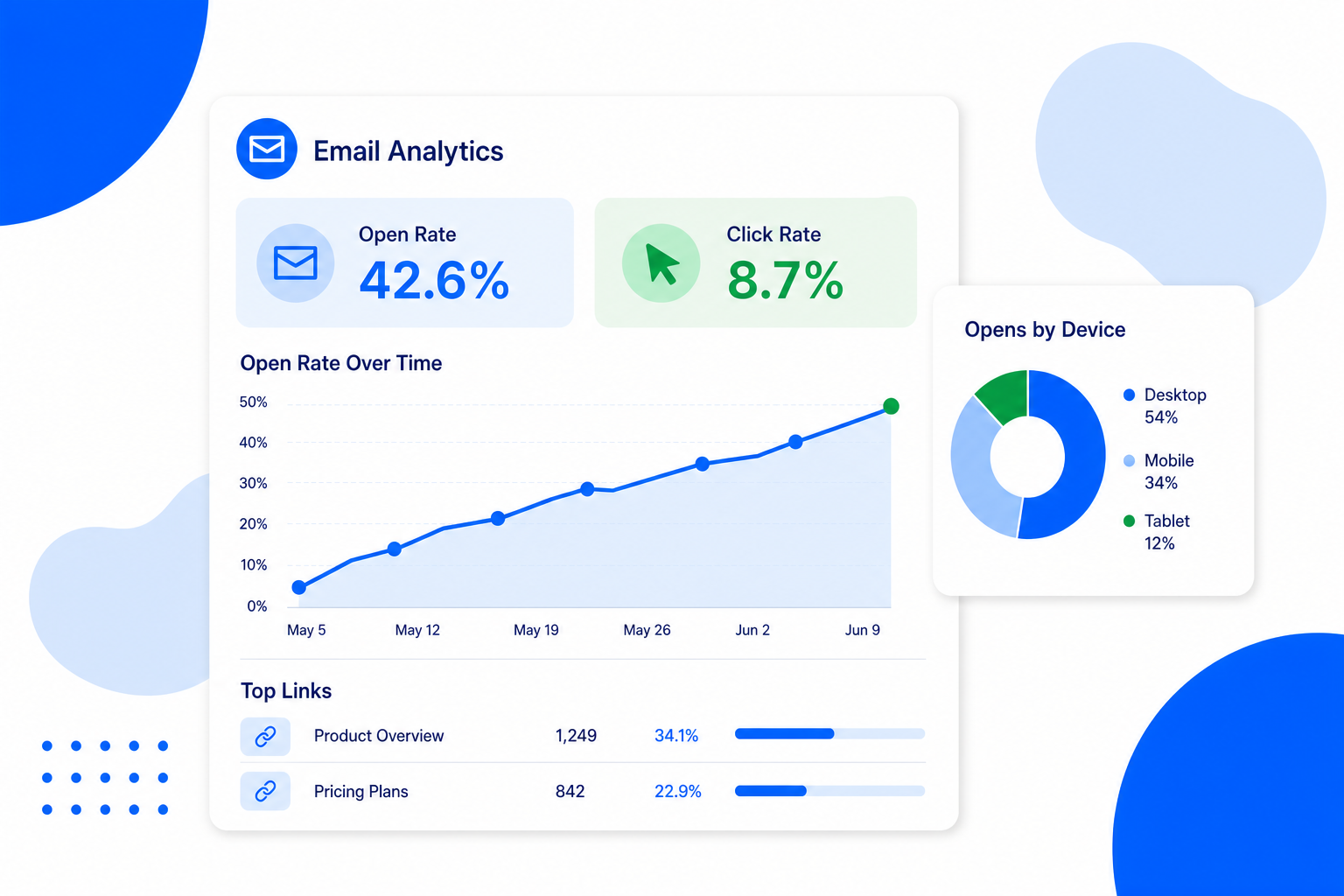
BrandBits lets you schedule every campaign for the exact day and time you choose, then shows the open rate for each send — so you can compare times and settle on the schedule your audience actually responds to.